It would be a mistake to regard Mecca deal as a distant development with little relevance. Turkey does not compartmentalise its power so neatly
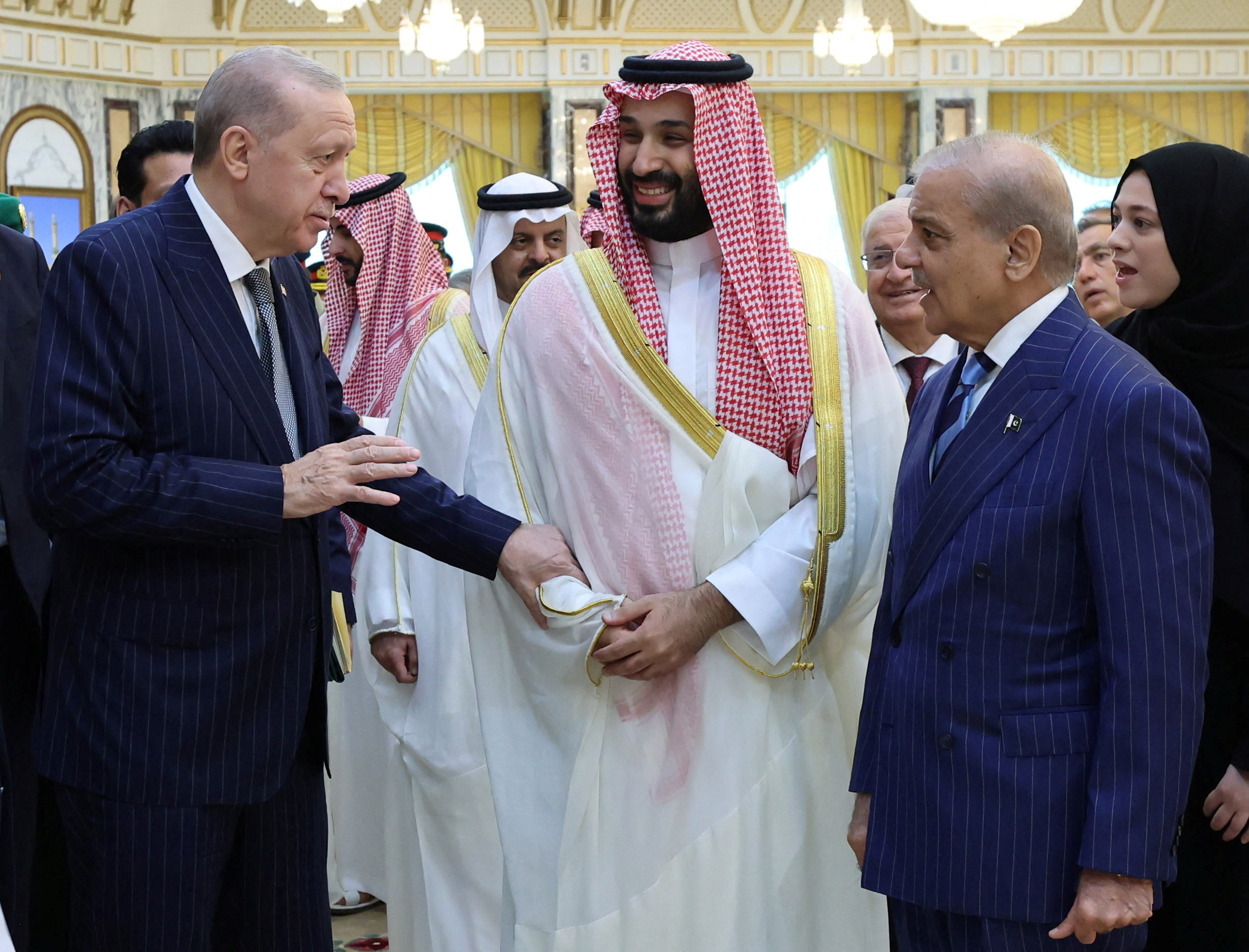
The Mecca Agreement, signed on August 7 by Saudi Arabia, Turkey and Pakistan, matters less for the alliance it creates than for the Middle East it may foreshadow.
Turkish Foreign Minister Hakan Fidan described it as technically equivalent to Nato’s Article 5: an armed attack against one would be considered an attack against all. The caveat, of course, is that even Nato’s Article 5 does not prescribe an automatic military response. Each member is obliged to assist, but retains the right to determine what “action it deems necessary”.
Moreover, Mecca is not Nato. The agreement has yet to be made public. We do not yet know what precisely would trigger its commitments in a crisis; how its command arrangements would work; or how far each member would actually be prepared to go in defence of another. Defence commitments announced on paper acquire strategic meaning only when tested.
The region has seen ambitious security arrangements before — from the Baghdad Pact and CENTO to the Saudi-led Islamic military coalition launched in 2015. Their record should encourage caution.
Significantly, within days of the agreement, the Houthis attacked Saudi Arabia’s Jazan refinery. No collective military response from the new partners followed.
Yet dismissing Mecca for these reasons would be equally mistaken.
The Middle East is reorganising itself.
For decades, its security architecture rested overwhelmingly on American power. That order is not disappearing. President Trump has publicly welcomed Mecca. But regional states are increasingly unwilling to entrust their security exclusively to the US.
Washington, too, may see advantages in greater regional burden-sharing. If capable partners assume more responsibility for their own security, this could reduce demands on American power at a time when Washington’s overriding long-term strategic challenge lies increasingly in the Indo-Pacific and China.
What may be emerging is neither a post-American nor necessarily an anti-American Middle East, but a more regionally managed system beneath a broader American strategic umbrella.
Saudi Arabia brings financial power and religious and political weight. Pakistan brings one of the Muslim world’s largest militaries — and, inevitably in the background, nuclear weapons. Turkey brings Nato experience, Nato’s second-largest military, a rapidly expanding defence industry and ambitions extending well beyond its immediate borders and neighbourhood.
Together they constitute a potentially formidable combination.
Mecca should not be understood simply as an anti-Iranian alliance. Iran is plainly part of the strategic environment that produced it. So are doubts about US security arrangements and the upheavals that have reshaped the region. The agreement also reflects regional powers seeking greater strategic autonomy in an uncertain international system.
Ankara inhabits several geopolitical worlds simultaneously. Turkey increasingly behaves as an à la carte member of Nato — drawing on the benefits of the Alliance while diverging from its partners when it sees fit. It engages Washington while maintaining close economic and political ties with Moscow and declining to join Western sanctions against Russia and Iran. It cultivates relations with Tehran while deepening ties with the Gulf and Pakistan. Its relationship with Hamas — which Turkey does not designate as a terrorist organisation — has repeatedly put Ankara at odds with the US, EU and Israel. At the same time, it has expanded its military footprint abroad and transformed its defence industry into a powerful instrument of foreign policy.
Mecca extends Ankara’s strategic reach.
This does not mean Turkey has changed camps. The more interesting point is that it increasingly refuses to accept that it must choose one. How long that balancing act can be sustained remains to be seen.
Nor are Mecca’s partners natural allies on every issue. Saudi Arabia and Turkey have competed for regional and religious influence, even as relations have improved. Pakistan brings its own priorities, particularly its rivalry with India. Mecca brings together converging interests; it does not erase divergent ones.
Turkey already envisages expansion. Egypt has been mentioned as a possible future member. But Cairo illustrates the limits. It cooperates closely with Saudi Arabia and has improved relations with Turkey. Yet it also has important ties with India, Greece and Cyprus, while Europe remains economically indispensable. Egypt also has a long-standing peace treaty with Israel that has weathered numerous challenges. Joining the Mecca Agreement could create as many problems as it solves.
What we are witnessing is a world of multiple alignments taking shape.
This is why the emerging order is unlikely to divide neatly into opposing blocs. States will cooperate in one theatre and compete in another. Today’s partner may be tomorrow’s counterweight — and occasionally both at the same time.
Israel faces the same complexity. A stronger Sunni security structure could help contain Iran. Yet a more powerful Turkey may complicate its regional calculations. Mecca can strengthen one element of Israel’s security environment while unsettling another.
And this brings us to the Eastern Mediterranean.
It would be a mistake to regard Mecca as a distant development with little relevance to Cyprus and Greece.
Turkey does not compartmentalise its power so neatly.
Its revisionist maritime agenda in the Aegean and Eastern Mediterranean cannot be divorced from its growing regional weight. The Blue Homeland doctrine, the maritime agreement with Libya, objections to regional energy projects, maritime spatial claims and Turkey’s latest declaration of marine parks in the Aegean and Eastern Mediterranean form part of a broader contest over jurisdiction, connectivity and ultimately influence.
None of this means Mecca is directed against Cyprus or Greece.
But power accumulated in one arena increases leverage in others.
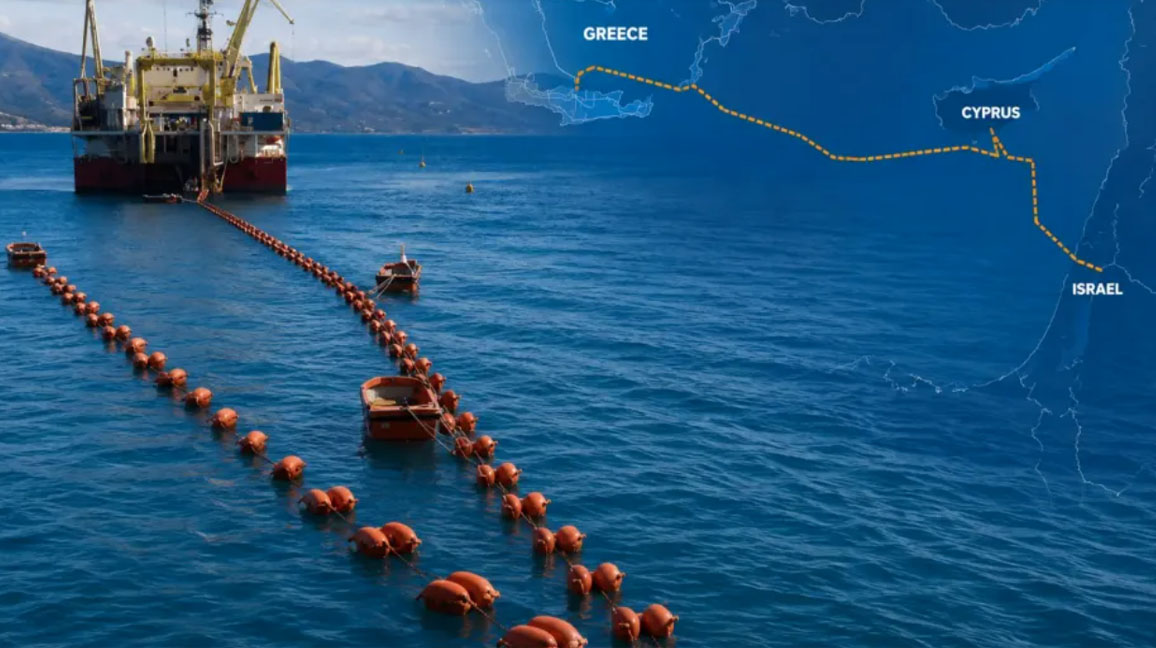
The Eastern Mediterranean is itself being transformed. Energy, electricity interconnectors, maritime routes, military access, ports and digital infrastructure increasingly intersect with sovereignty, security and geopolitical influence. The Great Sea Interconnector (GSI) is not merely an electricity cable. By connecting Cyprus to Greece and, eventually, Israel — and through them to the wider European system — it is also a geopolitical project.
Connectivity is becoming strategy.
Cyprus is not without strategic assets: EU membership; a geography at the intersection of Europe, the Middle East, the Eastern Mediterranean and the maritime approaches to the Suez Canal; excellent relations across the region; growing ties with the US, France, Israel, Egypt and India; links with Gulf states; its position as a major shipping centre; humanitarian and evacuation capabilities; ports and airfields; and its potential role in energy and digital connectivity. One day, we should hope, that network will include a very different relationship with Turkey.
Used intelligently, these assets can turn strategic relevance into strategic utility.
But Nicosia should harbour no illusions.
Good bilateral relations are not themselves a security architecture. Nor should Cyprus assume that its partners will come to its defence in a crisis, let alone fight a war on its behalf. The emerging Middle East will be transactional as well as strategic.
Cyprus therefore needs to think several moves ahead.
It should deepen its European security identity while widening its regional partnerships. It should seek Major Non-Nato Ally status with the US, further anchoring Cyprus in the evolving Western security architecture. It should accelerate projects that physically anchor it more firmly to Europe and neighbouring partners. And it should build on what it already does well, turning geography into greater strategic advantage through humanitarian operations, maritime security, logistics, energy, technology and regional dialogue.
Above all, Cyprus must remain an actor in the strategies unfolding around it, not merely the geographical space upon which other powers pursue theirs.
The Mecca Agreement may flourish. It may disappoint. It may expand. Much remains unknown.
But that is almost beside the point.
Something larger is happening around us. Regional powers are organising, hedging and repositioning themselves as the international system becomes more fragmented and transactional. Turkey understands this and is moving rapidly to position itself accordingly.
Cyprus must do the same — according to its own capabilities, interests and principles.
Geography gave Cyprus strategic importance.
Strategy must turn geography into strategic agency.