ΠΟΛΙΤΙΚΗ
Iran: regime change is a slogan, not a plan

The day after Iran: power, strategy and the unanswered question
Once again, the debate over Iran is framed as a stark choice between strength and weakness, action and inaction. Between good and evil. This is a false binary. The real question is not whether the US can use military force against Iran, but what problem such force is meant to solve, at what cost, and – more importantly – what unintended consequences may follow, regionally and globally.
Military power is a tool. It is not a strategy. When force becomes a substitute for political clarity of purpose, it creates the illusion of decisiveness while storing up strategic failure. The first question, therefore, must be simple and explicit: what is the objective? Ending Iran’s nuclear ambitions? Restoring credible deterrence? Constraining ballistic missiles? Changing regional behaviour? Ending support for non-state actors? Regime change? Or all of the above? History is unambiguous. Wars launched without a clearly defined end state rarely end on favourable terms.
The current crisis is marked by intense signalling rather than open conflict. A substantial US military deployment is accompanied by public warnings and parallel references to a possible deal with Tehran. Against this backdrop, Iran has engaged in indirect talks while insisting that any engagement be conducted on what it calls equal terms – confined to a narrow nuclear agenda rather than the broader security concerns raised by Washington. At the same time, Tehran continues military exercises and warnings of retaliation and wider escalation. Recent incidents, including the US shooting down of an Iranian drone approaching a carrier group, underscore how tightly military signalling and escalation are now intertwined.
Coercive diplomacy
Washington is engaging in classic coercive diplomacy: pressure designed to compel concessions without crossing the threshold into war. It is not stable, but neither is it accidental. As Sun Tzu observed, “the supreme art of war is to subdue the enemy without fighting.” The danger, however, lies not in signalling itself, but in miscalculation, i.e., misreading intent, overestimating control of events, or underestimating escalation.
This posture is consistent with the US National Security Strategy (NSS) issued by President Trump in November 2025. Hard lessons have been drawn from Vietnam, Iraq and Afghanistan. The NSS moves away from regime change as a declared objective, prioritising national interest, stability and restraint over externally imposed political transformation.
Endless wars, large-scale occupations and open-ended nation-building are no longer viewed as viable instruments of US statecraft – as the recent US surgical military intervention in Venezuela has illustrated. Instead, emphasis has shifted toward sanctions, diplomatic isolation, hybrid tools and economic pressure – all backed by credible military deterrence. Force is not removed from the table, but it is no longer presumed to be the default answer. Any intervention must demonstrate a clear strategic objective, proportional means and a credible political end state.
All politics are local
Foreign policy does not operate in a vacuum. As the late US Speaker Tip O’Neill famously observed, all politics is local. This truism remains valid even in moments of international crisis. With midterm elections approaching, domestic considerations shape decision-making in Washington. Voters are weary of distant wars with unclear purpose. Markets react sharply to instability. Energy prices, investor confidence, and economic sentiment matter. Strength plays well in domestic politics. Open-ended wars do not. This helps explain the tension between rhetoric and restraint that characterises the present moment.
The regional paradox
As I have argued elsewhere the confrontation involving Iran, Israel and the US is not episodic but systemic. It is part of a deeper strategic recomposition of the Middle East – including the Gulf – in which old diplomatic frameworks are eroding and deterrence increasingly substitutes for diplomacy.
Regional actors face a dilemma rarely acknowledged in public debate. Many want Iran contained, deterred and constrained. Some advocate outright regime change. But few want Iran shattered. Saudi Arabia’s recalibration reflects this tension. Public calls for restraint coexist with private warnings that inaction could embolden Tehran. Israel’s posture is similarly layered. Its core objectives remain unchanged, but current restraint reflects tactical judgement rather than strategic retreat. Timing and risk matter.
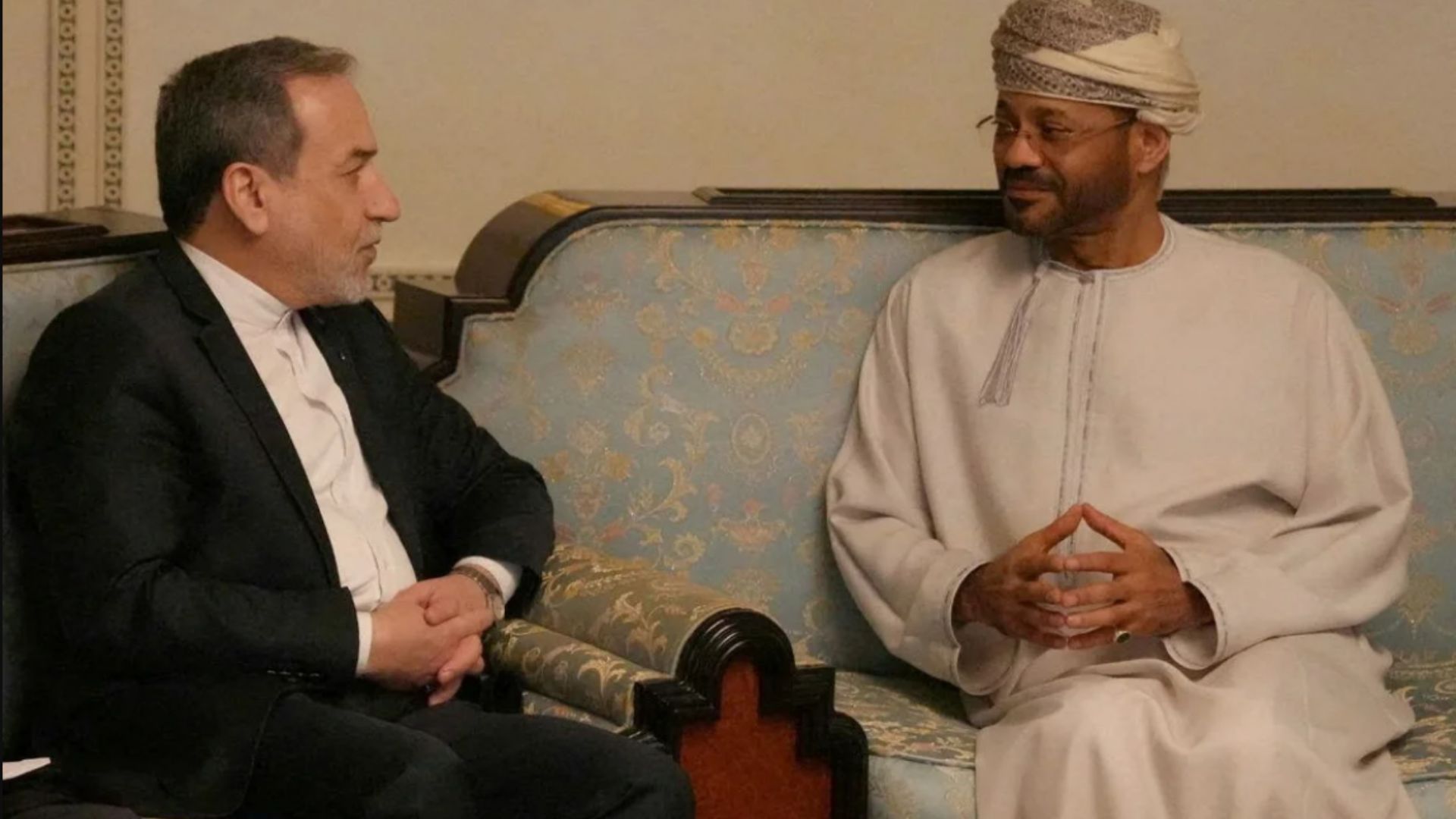
At the same time, regional diplomacy is also in motion. Oman hosted a first round of indirect US-Iran talks on February 6 – a shift from Istanbul that Tehran insisted upon, following earlier facilitation efforts by Turkey, Qatar, Egypt, Saudi Arabia and others. Washington and Tehran signalled a willingness to continue engagement.
The fact that indirect talks have taken place does not mean that Washington has accepted a nuclear-only frame. On the contrary, the core divergence over ballistic missiles, regional behaviour and support for non-state actors remains unresolved – a point the US underlined by announcing fresh oil and petrochemical sanctions within hours of the talks’ conclusion. What this underscores is that even at moments of acute tension, diplomatic channels remain active. Deterrence and dialogue now operate in parallel, often uneasily.
The paradox is simple. A triumphant Iran is dangerous. A chaotic Iran may be worse. Fragmentation, proxy escalation and uncontrollable retaliation would place the region on permanent edge. Stability and predictability – not victory – remain the unspoken regional demand.
The EU’s quiet alarm
The EU watches the crisis with particular unease – and Cyprus feels it immediately. Any major conflict involving Iran would produce direct consequences: energy, trade and financial disruptions, migration flows and renewed instability across the Mediterranean and the Levant, affecting economic stability, security planning and regional credibility in real time. At a time when the EU is already stretched by the war in Ukraine, the demands of defence rearmament, and an increasingly unpredictable US decision-making environment, a Middle East war would not be a distant theatre. It would be felt quickly and directly.
This explains Europe’s emphasis on de-escalation and diplomacy. It is not naïveté. It is vulnerability. It is strategic prudence.
Russia, China and nuclear proliferation
The growing coordination between Iran, Russia and China adds another layer of complexity. Joint military exercises scheduled among Iran, Russia and China, together with political signalling, do not amount to a formal alliance. Moscow and Beijing are unlikely to fight for Tehran, but they benefit from Western distraction and strategic overload.
Escalation hardens blocs, narrows diplomatic space, and accelerates the fragmentation of an already strained international order. A wider conflict would therefore serve interests well beyond the region – and not those of stability. One likely global consequence, particularly if a US strike on Iran coincides with the protracted war in Ukraine, is the erosion – if not collapse – of the remaining institutional constraints on nuclear proliferation. The expiration on February 5, 2026 of the New START (Strategic Arms Reduction Treaty) between the US and Russia, leaving the two largest nuclear arsenals without binding limits, underscores how fragile those constraints have become.
The deterrence lesson drawn by many actors is stark. Iran was struck during the 12-day war last June precisely because it did not yet possess nuclear weapons; nuclear-armed states such as North Korea are not. For Iran, and for other astute observers, this reinforces a dangerous but rational conclusion: that nuclear capability, not compliance, is the ultimate guarantor against intervention. That lesson, once absorbed, does not remain confined to one case. It spreads – and with it, the logic of proliferation.
The unanswered question: the day after
The most conspicuously unanswered question is the day after an attack on Iran. What follows a strike? What replaces the current order if it collapses? Regime change is a slogan, not a plan. Nuclear knowledge cannot be bombed away. Proxy networks do not disappear with command centres. Fragmentation creates vacuums that history shows are quickly filled, rarely benignly.
The danger, therefore, is not simply escalation, but consequence without ownership. When the political end state is undefined, force risks becoming an act of demonstration rather than an instrument of strategy. In diplomacy, there is rarely a final full stop. Only pauses, recalibrations, and the continuing necessity to shape an agreement both sides can own – the only kind capable of outlasting escalation.







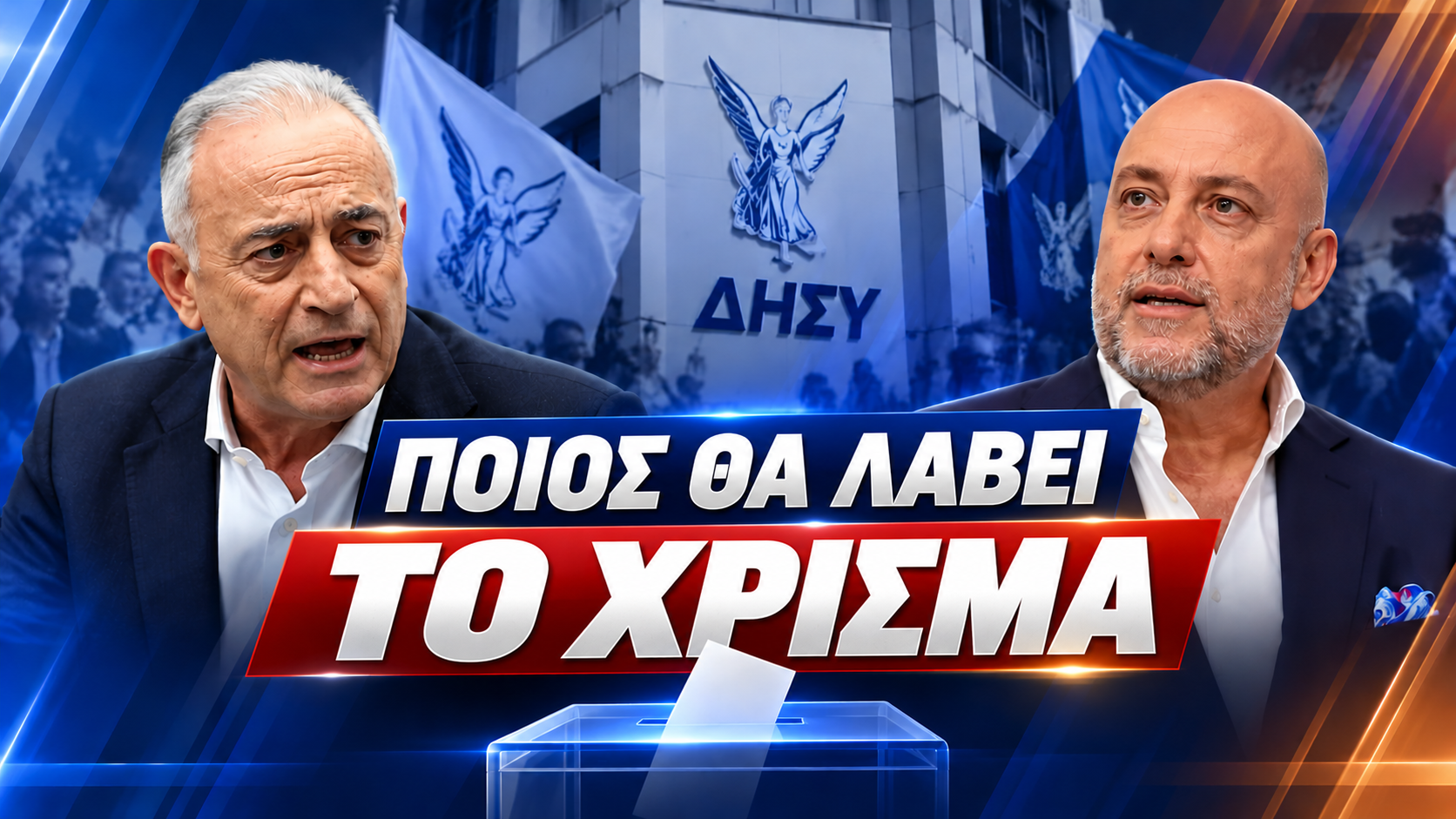
Δεν είναι απλώς μια εσωκομματική εκλογή. Είναι μια αναμέτρηση για το ποιος ΔΗΣΥ θα πάει στις Προεδρικές του 2028. Ο Αβέρωφ Νεοφύτου ζητά την πολιτική του επιστροφή. Ο Γιώργος Παμπορίδης επιχειρεί να εκφράσει την αλλαγή σελίδας. Και αυτή τη φορά, την απάντηση θα δώσει απευθείας η βάση.
Η μάχη άρχισε και επίσημα.
Αβέρωφ Νεοφύτου και Γιώργος Παμπορίδης πέρασαν τη Δευτέρα το κατώφλι της Πινδάρου και υπέβαλαν τις υποψηφιότητές τους για το χρίσμα του Δημοκρατικού Συναγερμού στις Προεδρικές Εκλογές του 2028.
Πίσω όμως από την τυπική διαδικασία κρύβεται ένα πολύ μεγαλύτερο πολιτικό δίλημμα.
Επιστροφή Αβέρωφ ή αλλαγή σελίδας με Παμπορίδη;
Αυτό είναι, σε μεγάλο βαθμό, το ερώτημα που καλούνται να απαντήσουν στις 28 Νοεμβρίου τα σχεδόν 50.000 μέλη του ΔΗΣΥ.
Και η απάντησή τους δεν θα καθορίσει μόνο ποιος θα είναι ο προεδρικός υποψήφιος της παράταξης. Θα δείξει προς ποια κατεύθυνση θέλει να κινηθεί ο ίδιος ο Συναγερμός μετά τις πληγές του 2023.
Αβέρωφ: «Επιστροφή στο σπίτι»
Ο Αβέρωφ Νεοφύτου μπήκε στην αναμέτρηση με ένα σαφές πλεονέκτημα: γνωρίζει τον ΔΗΣΥ όσο λίγοι.
Πρώην πρόεδρος του κόμματος, με πολυετή παρουσία στην πρώτη γραμμή, ισχυρές οργανωτικές διασυνδέσεις και βαθιά γνώση του κομματικού μηχανισμού, επιστρέφει για να ζητήσει από τη βάση μια δεύτερη ευκαιρία για τη μεγάλη μάχη.
Η εικόνα της υποψηφιότητάς του ήταν χαρακτηριστική.
Η αναφορά του στον ΔΗΣΥ ως το «σπίτι» και την «οικογένειά» του συμπύκνωσε ουσιαστικά ολόκληρο το πολιτικό αφήγημά του: επιστροφή στις ρίζες, εμπειρία, κομματική συνέχεια και επανασυσπείρωση.
Οι περισσότερες από 3.000 υπογραφές που συγκέντρωσε, όταν απαιτούνταν 500, αποτελούν παράλληλα σαφή επίδειξη οργανωτικής ισχύος.
Το μεγάλο ερώτημα, όμως, είναι άλλο:
Μπορεί η ισχυρή παρουσία του Αβέρωφ στον κομματικό μηχανισμό να μετατραπεί ξανά σε πλειοψηφικό πολιτικό ρεύμα;
Γιατί από τις Προεδρικές του 2023 μέχρι σήμερα έχουν αλλάξει πολλά.
Και η νέα κάλπη δεν αφορά μόνο την αποτίμηση του παρελθόντος, αλλά κυρίως το ποιος μπορεί να κερδίσει το 2028.
Παμπορίδης: Το στοίχημα της αλλαγής
Απέναντι στον Αβέρωφ βρίσκεται μια διαφορετική πολιτική πρόταση.
Ο Γιώργος Παμπορίδης δεν διαθέτει την ίδια διαδρομή στον κομματικό μηχανισμό. Διαθέτει, όμως, κυβερνητική εμπειρία και επιχειρεί να παρουσιάσει την υποψηφιότητά του ως επιλογή ανανέωσης και νέας πολιτικής αφετηρίας.
Ακόμη και η εικόνα της επίσημης υποβολής της υποψηφιότητάς του ήταν διαφορετική.
Χωρίς οργανωμένη κινητοποίηση υποστηρικτών και με χαμηλότερους τόνους, έδωσε έμφαση στην ανάγκη για ποιοτική και αδιάβλητη διαδικασία και, κυρίως, στην επόμενη ημέρα.
Το δικό του στοίχημα είναι διαφορετικό από εκείνο του Αβέρωφ.
Πρέπει να αποδείξει ότι μπορεί να μετατρέψει το αίτημα για ανανέωση σε πλειοψηφικό ρεύμα μέσα στην ίδια τη συναγερμική βάση.
Και ότι μπορεί να προσελκύσει όχι μόνο όσους θέλουν αλλαγή προσώπου, αλλά και εκείνους που αναζητούν έναν υποψήφιο με δυνατότητα διεύρυνσης πέρα από τα παραδοσιακά όρια του ΔΗΣΥ.
Η σκιά του 2023 παραμένει
Υπάρχει όμως και ένας τρίτος «πρωταγωνιστής» σε αυτή την αναμέτρηση.
Το 2023.
Οι προηγούμενες Προεδρικές Εκλογές άφησαν βαθιά σημάδια στον Δημοκρατικό Συναγερμό.
Η ήττα Αβέρωφ, η εκλογή Νίκου Χριστοδουλίδη, οι εσωτερικές διαφοροποιήσεις και όσα ακολούθησαν εξακολουθούν να επηρεάζουν τις πολιτικές ισορροπίες.
Γι’ αυτό και η κάλπη της 28ης Νοεμβρίου μπορεί να λειτουργήσει και ως μια καθυστερημένη απάντηση της βάσης σε όσα συνέβησαν τότε.
Θέλει επιστροφή σε μια δοκιμασμένη κομματική ηγετική φυσιογνωμία;
Ή θεωρεί ότι ο κύκλος εκείνης της περιόδου έχει κλείσει και χρειάζεται μια νέα πολιτική πρόταση;
Και στο βάθος… Χριστοδουλίδης
Υπάρχει, ασφαλώς, και το μεγάλο ερώτημα των Προεδρικών του 2028.
Ο πραγματικός αντίπαλος του νικητή της 28ης Νοεμβρίου δεν θα είναι ο ηττημένος της εσωκομματικής αναμέτρησης.
Θα βρίσκεται έξω από την Πινδάρου.
Και εκεί η συζήτηση για τον Νίκο Χριστοδουλίδη αποκτά αναπόφευκτα ιδιαίτερη σημασία.
Ο ΔΗΣΥ πρέπει να αποφασίσει όχι μόνο ποιον θα κατεβάσει στις Προεδρικές, αλλά και με ποια στρατηγική θα επιχειρήσει να επιστρέψει στην εξουσία.
Πώς θα τοποθετηθεί απέναντι στον σημερινό Πρόεδρο;
Πώς θα επαναπατρίσει ψηφοφόρους που απομακρύνθηκαν;
Και, κυρίως, ποιος από τους δύο μπορεί να οικοδομήσει ευρύτερες συμμαχίες όταν η αναμέτρηση μεταφερθεί από την εσωκομματική κάλπη στην κοινωνία;
Η Αννίτα στη μέση μιας δύσκολης εξίσωσης
Για την Αννίτα Δημητρίου η διαδικασία αποτελεί επίσης μια σημαντική πολιτική δοκιμασία.
Μετά την απόφασή της να μη διεκδικήσει το χρίσμα, η πρόεδρος του ΔΗΣΥ καλείται τώρα να εγγυηθεί μια διαδικασία που δεν θα αφήσει πίσω της έναν νικητή και δύο στρατόπεδα.
Γιατί η μεγαλύτερη πρόκληση για την Πινδάρου ίσως να μην είναι η 28η Νοεμβρίου.
Ίσως να είναι η 29η.
Ο νικητής θα πρέπει να ενώσει την παράταξη. Ο ηττημένος θα πρέπει να αποδεχθεί έμπρακτα το αποτέλεσμα. Και η ηγεσία θα πρέπει να μετατρέψει μια σκληρή εσωκομματική αναμέτρηση σε κοινή πορεία προς τις Προεδρικές.
Η βάση καλείται να επιλέξει πορεία
Για πρώτη φορά ο προεδρικός υποψήφιος του ΔΗΣΥ θα αναδειχθεί απευθείας από τη βάση του κόμματος.
Και αυτό δίνει στην αναμέτρηση χαρακτηριστικά πολύ μεγαλύτερα από μια συνηθισμένη εσωκομματική διαδικασία.
Στη μία πλευρά βρίσκεται ένας πρώην πρόεδρος που επιστρέφει ζητώντας να ολοκληρώσει μια πολιτική διαδρομή που έμεινε ανολοκλήρωτη το 2023.
Στην άλλη, ένας πρώην υπουργός που επιχειρεί να πείσει ότι το 2028 χρειάζεται διαφορετική αφετηρία.
Αβέρωφ ή Παμπορίδης. Επιστροφή ή αλλαγή σελίδας.
Στις 28 Νοεμβρίου, τα μέλη του ΔΗΣΥ δεν θα επιλέξουν απλώς υποψήφιο Πρόεδρο.
Θα επιλέξουν προς ποια κατεύθυνση θέλουν να κινηθεί ο Συναγερμός στην πιο κρίσιμη πολιτική μάχη των επόμενων χρόνων.


Ποιος έπαιξε τον ρόλο του Αγαμέμνονα στη περίπτωση της θυσίας της Αννίτας και τελικά θα φυσήξει ούριος άνεμος;
- Η απόσυρση της Αννίτας Δημητρίου: Απέτρεψε μια μετωπική σύγκρουση στον ΔΗΣΥ, αλλά άφησε ανοικτό το ερώτημα για το πώς οδηγήθηκε σε αυτή την απόφαση.
- Η επόμενη μέρα του ΔΗΣΥ: Η κρίση δεν τελείωσε. Μεταφέρεται πλέον στη μάχη για το ποιος θα καθορίσει την πολιτική φυσιογνωμία και την προεδρική επιλογή της παράταξης.
- Το ζήτημα της πολιτικής ισχύος: Η νυν πρόεδρος αποσύρθηκε, ενώ ο τέως πρόεδρος παρέμεινε στη διεκδίκηση, δημιουργώντας εύλογα ερωτήματα για τις πραγματικές ισορροπίες στο κόμμα.
- Η κρίση πολιτικού πολιτισμού: «Προδοσίες», παρασκήνιο, προσωπικές αιχμές, πιέσεις και «κηδεμόνες» δείχνουν μια πολιτική αντιπαράθεση που ξεπερνά πλέον τα όρια της σκληρής πολιτικής διαφωνίας.
Η Αννίτα Δημητρίου έκανε πίσω και ο ΔΗΣΥ απέφυγε, προς το παρόν, μια μετωπική σύγκρουση. Αυτό όμως δεν σημαίνει ότι αποκαταστάθηκε η εσωκομματική ομαλότητα. Αντίθετα, ο τρόπος με τον οποίο εξελίχθηκαν τα γεγονότα άφησε πίσω του ένα δύσκολο ερώτημα: ποιος καθορίζει σήμερα το παιχνίδι στον Δημοκρατικό Συναγερμό;
Η πολιτική εικόνα είναι απλή. Η νυν πρόεδρος αποσύρθηκε από τη διεκδίκηση του χρίσματος, ενώ ο τέως πρόεδρος παρέμεινε. Προηγήθηκαν δημόσιες παρεμβάσεις, αιχμές, καταγγελίες, συναντήσεις και έντονο παρασκήνιο. Γι’ αυτό και η απόφαση της Αννίτας δεν μπορεί να εξεταστεί μόνο ως πράξη «ενότητας», χωρίς να εξεταστούν οι συνθήκες που την προκάλεσαν.
Η απόφαση της Αννίτας
Η Αννίτα Δημητρίου επέλεξε να μην οδηγήσει τον ΔΗΣΥ σε μια εσωκομματική αναμέτρηση με τον Αβέρωφ Νεοφύτου, η οποία θα μπορούσε να εξελιχθεί σε σύγκρουση χωρίς εύκολη επιστροφή. Υπό αυτή την έννοια, η απόφασή της έχει πολιτική λογική και ενδεχομένως προστατεύει τόσο την ίδια όσο και την παράταξη από έναν νέο βαθύ διχασμό.
Το πρόβλημα βρίσκεται στη διαδρομή που προηγήθηκε. Η αρχική αντίδραση της ηγεσίας στην ανακοίνωση Αβέρωφ ήταν η υποψηφιότητα Αννίτας και η επιτάχυνση των εσωκομματικών διαδικασιών. Στη συνέχεια τα χρονοδιαγράμματα χαλάρωσαν και τελικά η ίδια η πρόεδρος απέσυρε το ενδιαφέρον της, μετά από ημέρες δημόσιας αντιπαράθεσης και έντονων παρασκηνιακών διεργασιών.
Αυτή είναι και η πολιτική αντίφαση που δύσκολα παρακάμπτεται: δεν έκανε πίσω ο τέως πρόεδρος για να διευκολύνει τη νυν πρόεδρο, αλλά η νυν πρόεδρος για να αποφευχθεί η σύγκρουση με τον τέως. Η εξέλιξη αυτή δεν ακυρώνει το επιχείρημα περί ενότητας, αλλά αναπόφευκτα δημιουργεί ερωτήματα για τις πραγματικές ισορροπίες ισχύος μέσα στον ΔΗΣΥ.
Ποιος έχει τον πρώτο λόγο;
Μέχρι πρόσφατα, η εικόνα που εξέπεμπε η παράταξη ήταν ότι η πρόεδρος έχει τον πρώτο λόγο και, εφόσον επιθυμεί να διεκδικήσει την Προεδρία της Δημοκρατίας, θα αποτελούσε την προφανή επιλογή του κόμματος. Η εξέλιξη των τελευταίων ημερών ανέτρεψε αυτή την εικόνα και επανέφερε στο προσκήνιο τον Αβέρωφ Νεοφύτου ως καθοριστικό παράγοντα των εξελίξεων.
Το πραγματικό ερώτημα της επόμενης ημέρας, συνεπώς, δεν περιορίζεται στο ποιος θα πάρει τελικά το χρίσμα. Αφορά το ποιος διαθέτει την πολιτική ισχύ να καθορίζει την πορεία της παράταξης. Και αν για να αποφευχθεί η εσωκομματική σύγκρουση χρειάστηκε να αποχωρήσει η ίδια η πρόεδρος από τη διεκδίκηση, τότε ο ΔΗΣΥ οφείλει κάποια στιγμή να απαντήσει πού βρίσκεται το πραγματικό κέντρο αποφάσεων.
Η επόμενη μέρα δεν θα είναι ήρεμη
Η απόσυρση της Αννίτας δεν τελειώνει την εσωκομματική συζήτηση. Υπάρχει ο Ιωνάς Νικολάου, υπάρχει ο Γιώργος Παμπορίδης, υπάρχουν διαφορετικά κέντρα επιρροής και μια μεγάλη κομματική βάση που θα κληθεί να τοποθετηθεί. Το διακύβευμα, μάλιστα, είναι μεγαλύτερο από την επιλογή ενός υποψηφίου για το 2028.
Ο ΔΗΣΥ καλείται να αποφασίσει ποιος θέλει να είναι πολιτικά. Θα επιστρέψει σε μια προηγούμενη περίοδο, θα επενδύσει στην ανανέωση ή θα συνεχίσει να ισορροπεί ανάμεσα σε διαφορετικές γενιές, προσωπικές στρατηγικές και κέντρα εξουσίας; Η αποχώρηση μιας υποψηφιότητας δεν δίνει απάντηση. Απλώς μεταθέτει τη συζήτηση για αργότερα.
Οι «κηδεμόνες» και το παρασκήνιο
Μέσα σε αυτό το σκηνικό, η ειρωνική αναφορά του Γιώργου Παμπορίδη ότι «φαίνεται πως ο καθένας θέλει τον κηδεμόνα του στις συναντήσεις» αποτυπώνει μια άλλη διάσταση της υπόθεσης. Πίσω από την ατάκα υπάρχει ένα ουσιαστικό ερώτημα για το ποιοι συμμετέχουν στις κρίσιμες πολιτικές διαβουλεύσεις, με ποια ιδιότητα και με ποια πραγματική επιρροή στις αποφάσεις.
Οι διαβουλεύσεις και οι συμβιβασμοί αποτελούν μέρος της πολιτικής. Το πρόβλημα αρχίζει όταν δημιουργείται η εντύπωση ότι οι αποφάσεις δεν διαμορφώνονται μέσα από καθαρές πολιτικές διαδικασίες, αλλά μέσα από προσωπικές παρεμβάσεις, παρασκηνιακές συναντήσεις και πιέσεις. Τότε τα όρια ανάμεσα στην πολιτική συνεννόηση και στην επιβολή γίνονται επικίνδυνα δυσδιάκριτα.
Η διολίσθηση του πολιτικού πολιτισμού
Το πιο ανησυχητικό στοιχείο των τελευταίων ημερών ίσως δεν αφορά καν το ποιος θα είναι υποψήφιος. Αφορά τον τρόπο με τον οποίο διεξάγεται πλέον η πολιτική αντιπαράθεση. «Προδοσίες», υπονοούμενα, προσωπικές αιχμές, διαρροές, συναντήσεις που αποκτούν σχεδόν συνωμοτικό χαρακτήρα και δημόσιες επιθέσεις δημιουργούν ένα πολιτικό περιβάλλον στο οποίο η διαφωνία εύκολα μετατρέπεται σε προσπάθεια αποδόμησης του αντιπάλου.
Υπάρχει διαφορά ανάμεσα στη σκληρή πολιτική σύγκρουση και στην πολιτική εξόντωση. Όταν ο στόχος παύει να είναι η αντιπαράθεση θέσεων και γίνεται η αμφισβήτηση των κινήτρων, της αξιοπιστίας ή ακόμη και της πολιτικής ηθικής του άλλου, τα όρια ξεπερνιούνται. Και τα χτυπήματα κάτω από τη μέση δεν εξαφανίζονται επειδή στο τέλος ακολουθούν χειραψίες, χαμόγελα και δηλώσεις ενότητας.
Χαρακτηριστικό είναι ότι, μετά την απόσυρση της Αννίτας Δημητρίου, ο Αβέρωφ Νεοφύτου μίλησε για «σώφρονα και υπεύθυνη απόφαση». Το ερώτημα είναι τι άλλαξε μέσα σε λίγες ημέρες. Οι πολιτικές διαφορές και όσα είχαν προηγηθεί ή απλώς η αποχώρηση μιας υποψηφιότητας που στεκόταν απέναντί του; Οι λέξεις στην πολιτική έχουν βάρος και δεν μπορούν να διαγράφονται ανάλογα με τις ανάγκες της στιγμής.
Η κοινωνία παρακολουθεί εμβρόντητη
Όλα αυτά συμβαίνουν σε μια περίοδο κατά την οποία η χώρα βρίσκεται αντιμέτωπη με πολύ σοβαρότερα ζητήματα. Το Κυπριακό βρίσκεται σε κρίσιμη φάση, η ακρίβεια πιέζει τα νοικοκυριά, η στέγαση εξελίσσεται σε μείζον κοινωνικό πρόβλημα και η εμπιστοσύνη προς τους θεσμούς δοκιμάζεται. Οι πολίτες περιμένουν απαντήσεις για προβλήματα που αντιμετωπίζουν σήμερα, όχι για τις προσωπικές στρατηγικές του 2028.
Κι όμως, η πολιτική συζήτηση έχει ήδη αρχίσει να περιστρέφεται γύρω από το ποιος θα είναι υποψήφιος, ποιος θα αποσυρθεί, ποιος συναντήθηκε με ποιον και ποιος «πρόδωσε» ποιον. Όσο η πολιτική εγκλωβίζεται σε προσωπικές φιλοδοξίες, παρασκήνιο και αλληλοεξοντώσεις, τόσο περισσότερο απομακρύνεται από τον πραγματικό λόγο ύπαρξής της: την αντιμετώπιση των προβλημάτων της κοινωνίας.
Η Αννίτα έκανε πίσω και ο ΔΗΣΥ απέφυγε την άμεση σύγκρουση. Η πραγματική δοκιμασία όμως αρχίζει τώρα: να αποδείξει ότι μπορεί να αποφασίσει για το μέλλον του μέσα από καθαρές διαδικασίες και πολιτικές επιλογές, χωρίς εκβιαστικά διλήμματα, προσωπικές βεντέτες και χτυπήματα κάτω από τη μέση.
Γιατί το κρίσιμο ερώτημα δεν είναι μόνο ποιος θα πάρει το χρίσμα του ΔΗΣΥ για το 2028. Είναι τι πολιτική και τι πολιτικός πολιτισμός θα έχουν απομείνει μέχρι τότε.


Τελικά, στην πολιτική τίποτα δεν πάει χαμένο. Ούτε καν η προϋπηρεσία στο… πόκερ.
Γυρίζοντας το ημερολόγιο δεκαπέντε χρόνια πίσω, βρίσκουμε ένα δημοσίευμα της «Σημερινής» και του SigmaLive με ημερομηνία 9 Απριλίου 2011 και τίτλο «Κύπρος: Ο νέος “παράδεισος” του πόκερ!». Πρωταγωνιστής, μεταξύ άλλων, ο Κρις Παναγιώτου, ο οποίος παρουσιαζόταν τότε ως πρόεδρος της νεοσύστατης Κυπριακής Ομοσπονδίας Πόκερ.
Δεκαπέντε χρόνια αργότερα, το όνομά του βρίσκεται ξανά στην επικαιρότητα. Όχι γύρω από τραπέζι πόκερ, αλλά γύρω από ένα άλλο τραπέζι: εκείνο της περιβόητης συνάντησης σε ψαροταβέρνα της Λευκωσίας με τον Αβέρωφ Νεοφύτου και την Αννίτα Δημητρίου.
Ο Αβέρωφ είχε αρχικά μιλήσει για τον «στενότατο των στενοτάτων συνεργάτη» της Προέδρου του ΔΗΣΥ. Στις 29 Σεπτεμβρίου, απαντώντας στη δημόσια τοποθέτηση του Κρις Παναγιώτου, τον κατονόμασε και υποστήριξε ότι η συγκεκριμένη συνάντηση δεν έγινε υπό την ιδιότητά του ως εκδότη.
Και κάπου εδώ το παλιό βιογραφικό αποκτά μια σχεδόν κινηματογραφική ειρωνεία.
Γιατί το πόκερ, όπως μας εξηγούσε εκείνο το δημοσίευμα του 2011, είναι παιχνίδι στρατηγικής. Θέλει υπομονή. Θέλει διάβασμα του αντιπάλου. Θέλει να ξέρεις πότε κρατάς κλειστά τα χαρτιά σου και πότε τα ανοίγεις.
Κυρίως, όμως, θέλει να ξέρεις πότε ο απέναντι μπλοφάρει.
Και κάπως έτσι φτάσαμε στο πολιτικό τραπέζι του 2026.
Σύμφωνα με την εκδοχή του Αβέρωφ Νεοφύτου, στο επίμαχο δείπνο τού ζητήθηκε να συμβάλει στην επανεκλογή της Αννίτας Δημητρίου στην Προεδρία της Βουλής, με αναφορά σε κοινή πορεία προς τις Προεδρικές του 2028. Ο ίδιος δήλωσε ότι δεν χρειαζόταν ανταλλάγματα για να στηρίξει την παράταξή του.
Ο Κρις Παναγιώτου δίνει εντελώς διαφορετική εκδοχή. Υποστηρίζει ότι επρόκειτο για συνάντηση στο πλαίσιο επαφών που πραγματοποιεί ως εκδότης με πολιτικούς αρχηγούς και απορρίπτει κατηγορηματικά την ύπαρξη οποιασδήποτε συμφωνίας για τις Προεδρικές του 2028.
Τα γεγονότα που ακολούθησαν είναι γνωστά: η Αννίτα Δημητρίου επανεξελέγη Πρόεδρος της Βουλής στις 4 Ιουνίου 2026, συγκεντρώνοντας στον δεύτερο γύρο 29 ψήφους, με τη στήριξη ΔΗΣΥ, ΔΗΚΟ και Άμεσης Δημοκρατίας.
Και τώρα ο Αβέρωφ άνοιξε τα δικά του χαρτιά για το 2028.
Οπότε το ερώτημα αποκτά ενδιαφέρον:
Μήπως ο άνθρωπος που κάποτε επιχειρούσε να βάλει το κυπριακό πόκερ στον χάρτη, αποφάσισε χρόνια αργότερα να παραδώσει μαθήματα… πολιτικού πόκερ στην Πινδάρου;
Γιατί άλλο Texas Hold’em και άλλο… Pindarou Hold’em.
Στο πρώτο παίζεις με μάρκες.
Στο δεύτερο οι μάρκες είναι πολιτικές συμμαχίες, κομματικές ισορροπίες, αξιώματα και —κυρίως— το 2028.
Και υπάρχει ακόμη μία μικρή λεπτομέρεια που κάνει την ιστορία πιο ενδιαφέρουσα: στο πόκερ μπορείς να είσαι εξαιρετικός παίκτης χωρίς να δείξεις ποτέ τα χαρτιά σου.
Στην πολιτική όμως υπάρχει πάντα ο κίνδυνος να αποφασίσει κάποιος άλλος στο τραπέζι να τα ανοίξει πρώτος.
Αυτό ακριβώς έκανε ο Αβέρωφ.
Και τώρα στην Πινδάρου δεν συζητούν απλώς ποιος κρατά τον άσο.
Συζητούν ποιος μοίραζε τελικά την τράπουλα.
–Sniper–


Ιράν, τράπεζες και LNG: Το γεωπολιτικό ντόμινο που φτάνει μέχρι τις κορυφές της εξουσίας

Η Ευρώπη χάνει τον βηματισμό της: Τραμπ, πόλεμοι και εσωτερικές ρωγμές

ΔΗΣΥ: Αβέρωφ ή Παμπορίδης; Επιστροφή ή αλλαγή σελίδας για το 2028

Η ανάπτυξη ως κοινή υπόθεση – Πέντε χρόνια Πρωτοβουλίας Παγκόσμιας Ανάπτυξης

Η Κύπρος έχει πολλά να κερδίσει από την Ινδία

Ελλάδα – Τουρκία: Ισχυρή αποτροπή, αποφασιστική απάντηση και ο στρατηγικός ρόλος του Ισραήλ

Η Ιφιγένεια του ΔΗΣΥ: Αρκεί η «θυσία» της Αννίτας για να φυσήξει ούριος άνεμος;

Ο Μεσσίας ορμώμενος από την Αργάκα θα σώσει την Κύπρο

66 χρόνια Κυπριακή Δημοκρατία: Ελληνικά F-16 στον ουρανό και διεθνής παρουσία με ισχυρούς συμβολισμούς

Με λαμπρότητα ο εορτασμός της Εθνικής Επετείου της Κίνας και του Moon Festival στην Κύπρο

Η τέλεια καταιγίδα της Πινδάρου: Ο Αβέρωφ αποφάσισε, οι «πιστοί» του 2023 τι κάνουν;

1η Οκτωβρίου 2026: Σε απευθείας μετάδοση από το ΡΙΚ η στρατιωτική παρέλαση

Όταν ο «στενότερος των στενοτέρων» φιλοδοξεί να μάθει στην Αννίτα… πολιτικό πόκερ!

Αβέρωφ Νεοφύτου: «Ο προδομένος ποτέ δεν προδίδει, αλλά δεν θα ξαναπροδοθεί»
66 χρόνια Κυπριακή Δημοκρατία: Ελληνικά F-16 στον ουρανό και διεθνής παρουσία με ισχυρούς συμβολισμούς
Με λαμπρότητα ο εορτασμός της Εθνικής Επετείου της Κίνας και του Moon Festival στην Κύπρο
Η Ιφιγένεια του ΔΗΣΥ: Αρκεί η «θυσία» της Αννίτας για να φυσήξει ούριος άνεμος;

Ποιος πληρώνει τον πόλεμο; Η Ευρώπη στενάζει και το Λονδίνο συνεχίζει να γράφει επιταγές για την Ουκρανία
Ο Μεσσίας ορμώμενος από την Αργάκα θα σώσει την Κύπρο
Ελλάδα – Τουρκία: Ισχυρή αποτροπή, αποφασιστική απάντηση και ο στρατηγικός ρόλος του Ισραήλ
-
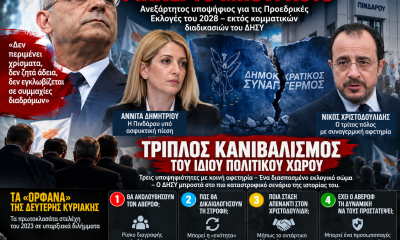 Άρθρα Χάρη Θεραπή4 weeks ago
Η τέλεια καταιγίδα της Πινδάρου: Ο Αβέρωφ αποφάσισε, οι «πιστοί» του 2023 τι κάνουν;
-
 LIVE4 weeks ago
1η Οκτωβρίου 2026: Σε απευθείας μετάδοση από το ΡΙΚ η στρατιωτική παρέλαση
-

 Off the Record1 month ago
Ψάχνουν τον νέο Χριστοδουλίδη. Ο παλιός είναι ακόμη στο Προεδρικό!
-
 voulitv1 month ago
Χριστοδουλίδης 2028: Χρειάζεται το ΕΛΑΜ, αλλά πόσο κοντά το αντέχει;
-
 Off the Record1 month ago
Το είπα-ξείπα της Αννίτας
-
 ΕΠΙΚΑΙΡΟΤΗΤΑ1 month ago
Χρίστος Κληρίδης: Γιατί να παραμένουμε στη ΔΔΟ όταν η Τουρκία την έχει απορρίψει;
-
 Off the Record1 month ago
Τορναρίτης στο Προεδρικό: Αξιοποίηση εμπειρίας ή μήνυμα προς την Πινδάρου;
-
 Άρθρα Χάρη Θεραπή1 month ago
Πρέπει πρώτα να κερδίσει τον ΔΗΣΥ για να διεκδικήσει την Κύπρο;
-
 Off the Record4 weeks ago
Όταν ο «στενότερος των στενοτέρων» φιλοδοξεί να μάθει στην Αννίτα… πολιτικό πόκερ!
-
 ΕΠΙΚΑΙΡΟΤΗΤΑ4 weeks ago
Αβέρωφ Νεοφύτου: «Ο προδομένος ποτέ δεν προδίδει, αλλά δεν θα ξαναπροδοθεί»